
The way we manage workplaces is changing — fast.
For decades, office and facility planning relied on static drawings, spreadsheets, and guesswork. Today, organisations are moving toward digital twins and integrated data models — systems that bring buildings, assets, and occupancy into a single, live view.
The shift is more than technical. It’s about making smarter decisions faster. When leaders have real-time visibility into how spaces are used, maintenance schedules, and operational trends, they can act proactively instead of reacting to problems.

Why Traditional Facilities Management Is Falling Behind
Traditional planning methods fail to capture the realities of modern workplaces:
- Changes in team structures and office layouts
- Fluctuating attendance patterns due to hybrid work
- Underutilised spaces that cost money but provide little value
Without accurate data, planning becomes reactive, inefficient, and costly.
The Power of Digital Twins in Facilities Management
A digital twin is a dynamic model of your workplace that reflects real-world conditions. It integrates:
- Floor plans and layouts
- Occupancy and utilisation data
- Asset and maintenance information
The benefits are clear:
- Predictive planning: anticipate space and resource needs before problems arise
- Optimised layouts: reallocate underused areas and improve collaboration zones
- Cost control: reduce wasted space and unnecessary maintenance
With a digital twin approach, every decision — from desk allocation to major renovations — is informed by actual usage and operational intelligence.
What a Digital Twin Brings to Your Workplace
Platforms like Accordant make digital twins practical and actionable. By linking CAD floor plans with live utilisation data, bookings, and operational reports, organisations gain one central source of truth for their workplace.
What makes Accordant stand out is its ability to overlay multiple data sources — from occupancy sensors and gate entry logs, to network connection patterns and even human observations. This means facility managers don’t just see desk bookings on paper, they see how the office is truly being used, in real time.
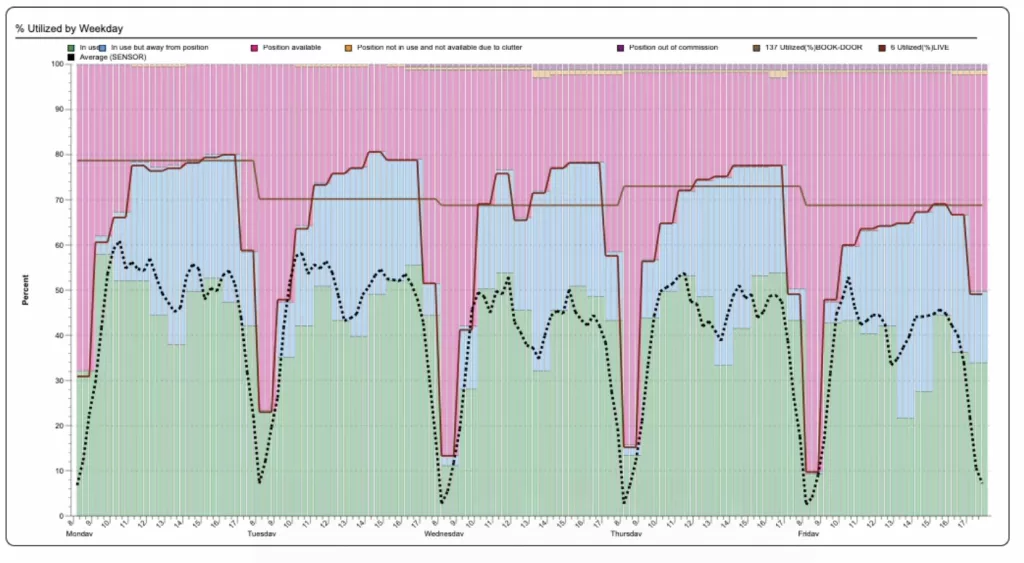
With this complete picture, teams can:
- Visualise occupancy trends across floors, zones, or teams
- Track utilisation in real time, capturing both planned and spontaneous activity
- Plan moves, layout changes, and maintenance efficiently based on actual usage patterns
- Identify underutilised spaces and reallocate resources where they’re needed most
Rather than relying on assumptions, anecdotal observations, or siloed spreadsheets, Accordant enables organisations to make evidence-based decisions that optimise space, reduce wasted costs, and support a more flexible, hybrid workplace experience
How Tools Like Accordant Make It Work
The modern workplace is dynamic, hybrid, and data-driven. Facilities leaders who embrace digital twins gain not just insight, but agility. They can optimise costs, improve experiences, and design workplaces that truly support how people work today — not how they worked yesterday.